Water damage and mold problems often go together because mold thrives in environments where moisture remains present.
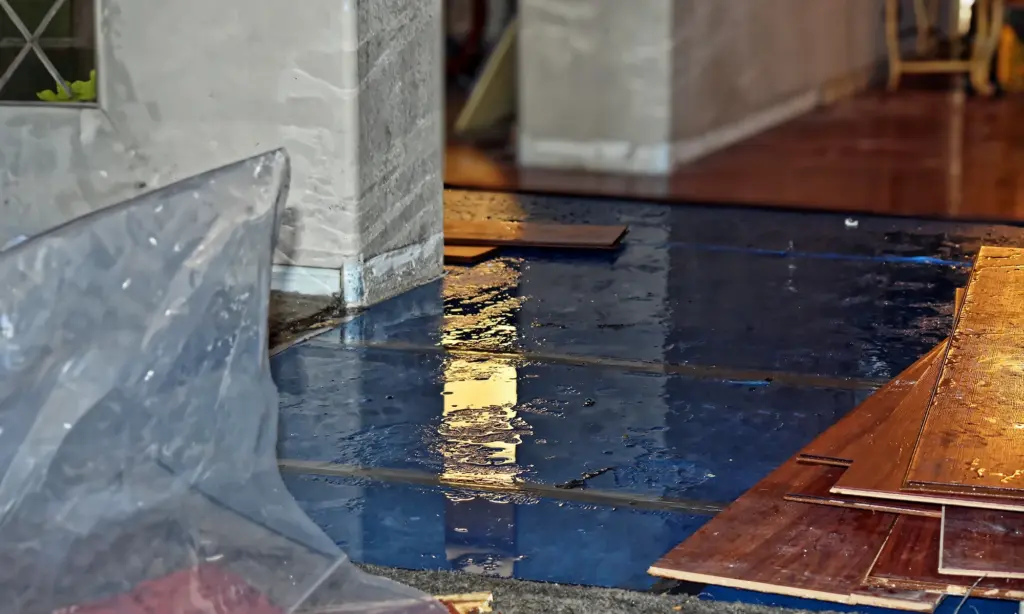
A leaking pipe, flooded basement, roof leak, overflowing appliance, or storm-related water intrusion can leave building materials damp long after the visible water disappears.
Understanding the relationship between water damage and mold can help property owners take action before the problem becomes more difficult to address.
Why Moisture Creates Mold Problems
Many materials inside homes can absorb and hold moisture, including:
- Drywall
- Wood
- Insulation
- Carpet
- Flooring
- Ceiling materials
- Cabinets
When these materials stay damp, they can create conditions that support mold growth.
The moisture does not always have to be visible.
Water can remain behind walls, beneath floors, and inside enclosed spaces.
Mold May Develop Outside the Visible Water Area
Water often travels farther than homeowners expect.
For example, a leak that appears to affect only one section of flooring may also reach:
- The subfloor
- Adjacent walls
- Baseboards
- Insulation
- Nearby rooms
That is why professional water damage restoration involves more than simply removing standing water.
The affected materials should also be checked for remaining moisture.
Common Signs of a Moisture or Mold Problem
Watch for signs such as:
- Musty odors
- Dark or discolored areas
- Recurring staining
- Peeling paint
- Soft drywall
- Warped flooring
- Visible growth
- Damp areas that do not seem to dry
If these signs appear after a water damage event, the affected area should be evaluated.
Proper Drying Is Important
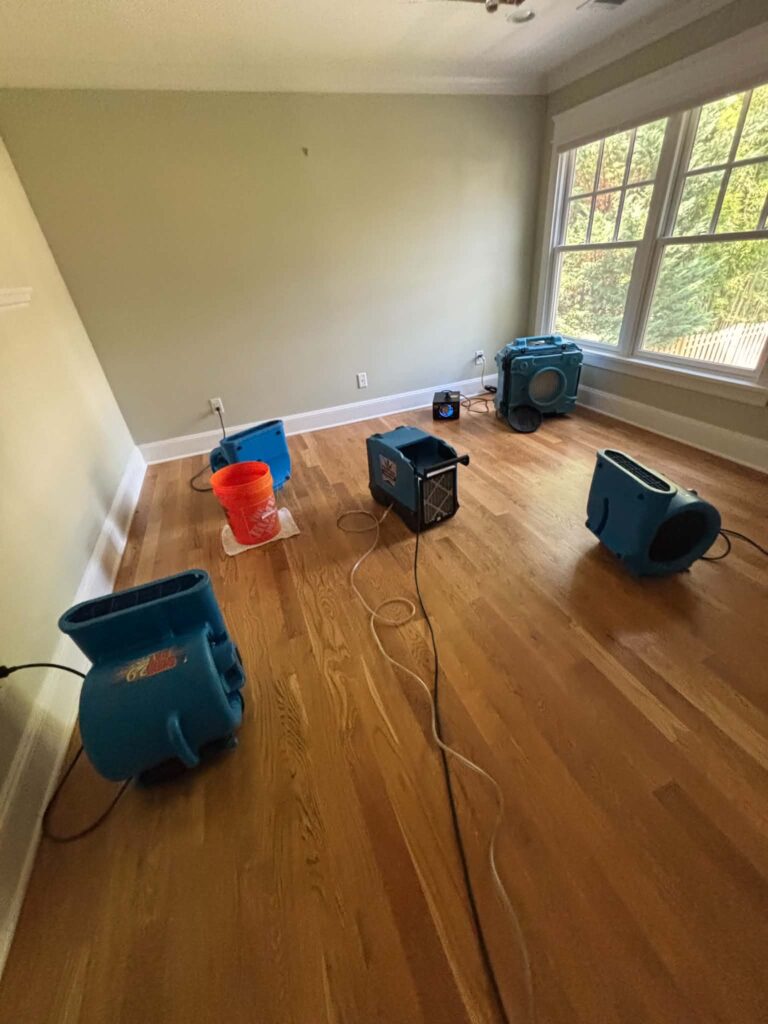
Water restoration typically includes removing excess water and drying the affected structure with professional equipment.
Depending on the loss, equipment may include air movers and dehumidifiers designed to remove moisture from building materials and the surrounding air.
Moisture readings can also help determine whether materials have actually dried.
What if Mold Is Already Present?
If mold has developed, the project may require mold remediation in addition to water damage restoration.
The process can involve addressing the moisture source, containing the affected area when appropriate, removing materials that cannot be restored, cleaning affected surfaces, and preparing the area for repairs.
Simply cleaning the visible surface may not solve the problem if moisture remains behind it.
Preventing Future Problems
The best way to reduce the chance of recurring mold is to address both the visible damage and the underlying moisture source.
That means repairing leaks, drying affected materials properly, and replacing damaged materials when necessary.
Need Water Damage or Mold Remediation in New Jersey?
Clean Dry & Restore provides water damage restoration and mold remediation throughout North and Central New Jersey.
If you’re dealing with a leak, flood, hidden moisture, or possible mold problem, contact our team to schedule an assessment and determine the next steps.